
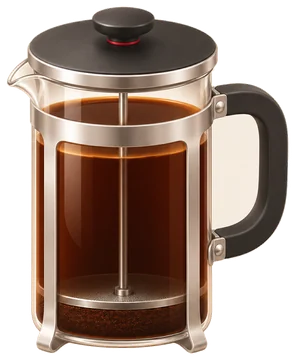
How to make plunger coffee
A plunger (also called a French press or cafetière) is the easiest way to make good coffee at home. There is no paper filter, so you get a rich, full-bodied cup. Get four things right and it is hard to go wrong: the ratio, the grind, the water and the timing.
The quick recipe
For an 8 cup plunger (1 litre):
- Coffee: 67g, about 13 and a half level tablespoons
- Water: 1 litre, just off the boil (93 to 96°C)
- Grind: coarse, like raw sugar
- Time: 4 minutes, then plunge
That is a ratio of 1:15, or 1g of coffee for every 15ml of water. Making a different amount? The plunger calculator works it out for any size and strength.
What you need
- A plunger
- Coffee beans, ground coarse
- A kettle
- Kitchen scales (a tablespoon works if you do not have scales)
- A spoon and a timer
Step by step
- Heat the water. Boil the kettle, then let it sit for about 30 seconds. That brings it down to around 93 to 96°C.
- Warm the plunger. Swirl a little hot water around the jug and tip it out, so the coffee does not cool too fast.
- Add the coffee. Weigh it into the empty jug. Coarse is the key word here.
- Pour in all the water. Fill it to your amount and start the timer.
- Stir at 30 seconds. Give it a gentle stir so all the coffee is wet, then put the lid on with the plunger pulled up.
- Wait until 4 minutes. Leave it alone.
- Plunge slowly. Press down gently and evenly. If it is hard to push, ease off and go slower.
- Pour it all out straight away. Coffee left sitting on the grounds keeps brewing and turns bitter. Pour any extra into a jug or a second cup.
The plunger calculator has a built-in timer that walks you through these steps.
How strong should it be?
| Strength | Ratio | For 1 litre |
|---|---|---|
| Mild | 1:17 | 59g coffee |
| Balanced | 1:15 | 67g coffee |
| Strong | 1:13 | 77g coffee |
Start at balanced. If you take milk, you may like it a step stronger.
Fixing a plunger that tastes off
- Sour or thin: the coffee did not brew enough. Grind a little finer, or brew for 30 seconds longer.
- Bitter or harsh: it brewed too much. Grind a little coarser, brew for a little less time, and pour it out as soon as you plunge.
- Muddy or gritty: the grind is too fine, or you plunged too hard. Go coarser and press slowly. Letting the cup sit for a minute also lets fine bits settle.
- Weak but not sour: use more coffee. Move from mild to balanced, or balanced to strong.
Change one thing at a time, so you know what made the difference.
Good to know
- Use fresh beans. Coffee tastes best within a few weeks of its roast date. Perth has plenty of local roasters to choose from.
- Grind just before you brew if you can. Ground coffee goes stale much faster than whole beans.
- Clean the mesh filter. Old coffee oils caught in the mesh make the next brew taste stale. Take it apart and rinse it now and then.